


Starting your small business and becoming your own boss is exciting. But it can quickly become difficult when the numbers don’t add up. As an owner, you need to take on accounting responsibilities. While it is not the most exciting task, managing finances is important for long-term growth.
Effective accounting practices tell you where the money comes from and goes to and help you calculate taxes. This is why you should understand small business accounting to make smarter decisions with more profits.
This guide aims to familiarize you with the basics of small business accounting, the necessary tools, and how to handle your business accounting.
Key Takeaways
- Small business accounting starts with strong bookkeeping, because accurate daily records are essential for better decisions, tax compliance, and long-term growth.
- A small business owner should understand financial statements and cash flow, because profit alone is not a guarantee of a financially healthy business.
- Regular reviews, tac planning, and professional support help reduce risk and improve sustainability, even for a small or new business.
Understanding the Basics of Small Business Bookkeeping
Bookkeeping is the backbone of small business accounting. It involves
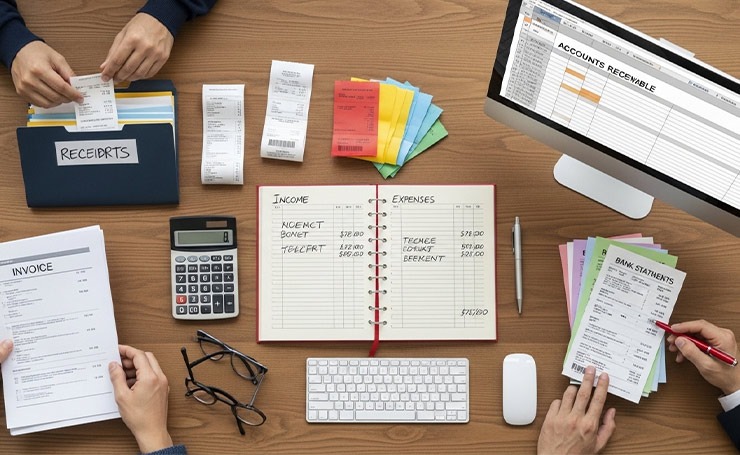
- Recording day-to-day income and expenses
- Managing invoices and receipts
- Tracking accounts payable and receivable
- Reconciling bank statements
Difference between Accounting and Bookkeeping
These terms are often used interchangeably, but there is a clear difference between bookkeeping and accounting. Think of both of them as layers of the same system.
Bookkeeping is the day-to-day recording of financial transactions, while accounting takes data and turns it into reports and insights for informed decision-making.
| Aspect | Bookkeeping | Accounting |
| Purpose | Records daily transactions | Analyzes and interprets data |
| Focus | Accuracy and organization | Insights and decision-making |
| Scope | Transaction-level details | Financial reports and strategy |
| Tasks | Recording income and expenses | Preparing financial statements |
| Timeframe | Day-to-day | Monthly, quarterly, yearly |
| Skill Level | Basic financial skills | Advanced financial knowledge |
| Output | Ledgers and records | Reports and financial analysis |
| Goal | Keep records accurate | Improve business performance |
Key Financial Statements
Bookkeepers work with three types of financial reports: one showing assets and liabilities (the balance sheet), one showing cash inflows and outflows (the cash flow statement), and one highlighting profits and losses (P&L or income statement).
Balance Sheet
This sheet measures what your company owns and owes. It is a complete snapshot of your business’s financial health at a certain point in time.

Balance sheets are prepared at quarter-end. However, you can prepare them at any time. The following elements are included in the balance sheet.
- Assets: These have economic value. Some examples of assets include cash, real estate, accounts receivable, and inventory.
- Liabilities: These are what your company owes to others, for instance, income taxes, employee wages, accounts payable, and mortgage loans.
- Shareholders’ equity: It represents a company’s net worth: the amount shareholders will get if all the assets have been converted to cash and all the debts have been paid.
Cash Flow Statement
The cash flow statement details the amount of money coming in and leaving your business. These statements focus on liquid assets: investments that you can turn quickly into cash.

A cash flow statement has the following components.
- Operating Activities: These activities include generating cash and spending it on business activities, such as paying employees’ wages and clearing vendor payments.
- Investing Activities: Investing activities include asset sales and purchases, and giving loans to vendors.
- Financing Activities: These activities include generating and spending cash to run the business, such as receiving cash from issuing stock and paying cash dividends to shareholders.
Income Statement
An income statement, also termed the profit and loss (P&L) statement, shows a small business’s expenses and revenues over a certain period. These statements are prepared quarterly or annually.
An income statement is comprised of four elements: revenue, gains, expenses, and losses.
- Revenue: Revenue encompasses operating and non-operating revenue. Operating revenue is what a business makes through its primary activities, like selling products, and non-operating revenue makes up a business’s secondary activities, like bank account interest.
- Gains: Gains involve making money from one-time, non-business activities, like selling unused buildings.
- Expenses: Expenses are the money that you spend to keep your business running.
- Losses: Losses are all elements, such as an unfavorable lawsuit settlement and assets sold for less than their value.
- Net Income: Businesses calculate their net income by subtracting their expenses from their revenue. If revenue is more than expenses, it means profit. If revenue is less than expenses, it means a net loss.
How to Do Small Business Accounting
This section explores a step-by-step guide to doing your business’s accounting.
Open a Bank Account
Operating a dedicated bank account just for your business safeguards your personal assets in case of bankruptcy, audits, or lawsuits. It is also easier to get funding from investors and creditors if you have strong financial records.

You need the following to open a business bank account.
- Registered business name
- Provincial or state registration
- Appropriate business licenses
- Any other additional documents
Build your Business Credit Score
As a new business owner, you should get a business credit card to build credit. This will help you in future funding or when you need to finance large purchase orders.
Moreover, choose a separate credit card to keep your personal and business finances separate from each other.
Set an Accounting System
An accounting system helps you understand your business’s progress by analyzing data in your financial statements. When managing books, you have two options.
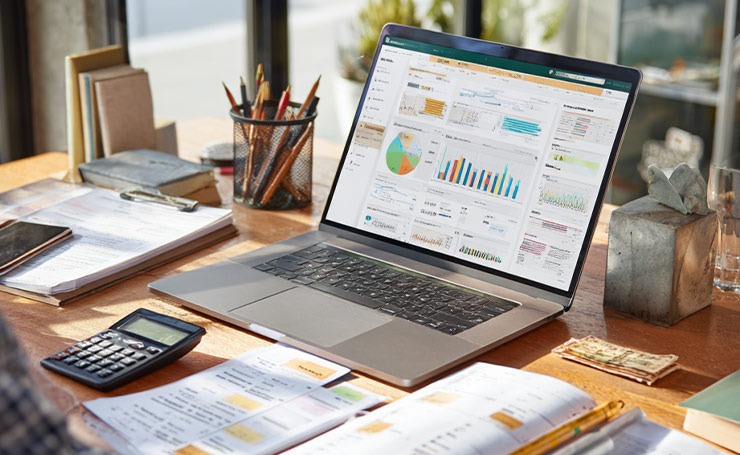
- Do it yourself using accounting software, or
- Work with a full-time or contract bookkeeper or accountant.
You also need to select one of the following accounting methods.
- The cash method records income when you receive money and expenses when you pay money.
- The accrual method records income and expenses when they happen, even if the money has not been paid or received yet.
Track your Expenses
Tracking your small business’s expenses allows you to monitor its growth, create finacial statement, prepare tax returns, and monitor deductions.
The following are the most important expense types you should record.
- Meals and entertainment: Note attendees and the purpose of business meals.
- Out-of-town travel: Keep receipts to prove business travel.
- Vehicle use: Track trips, mileage, and purpose for business deductions.
- Business gifts: Record attendance to classify expenses correctly.
- Home office: Deduct the portion of home and utilities used for business.
Develop a Payroll System
As your small business grows, you need to get outside help. You need to determine whether you want full-time employees or independent contractors.
For employees
- You need to create a payroll system.
- Additionally, set up tax withholding.
- You can also use payroll services or software. This feature is available in many accounting tools.
For independent contractors, you need to
- Track all payments carefully
- Keep contact information for tax forms
Select your Payment Methods
As your small business starts receiving payments, it is important to set up a reliable payment method for customers.
- Credit and debit cards: Most customers use these for payments.
- Digital wallets: Services like Apple Pay and PayPal make payments easy and contactless.
- Bank transfers: These are used for larger or recurring payments.
When you are choosing a payment method, compare
- Transaction fees
- Monthly service fees or subscription costs
- Ease of tracking payments for accounting purposes
Set Up Tax Processes
Tax rules are different for online and in-person sales. Physical stores charge taxes based on their location, while online businesses need to consider where their clientele lives.

Moreover, selling to international customers is more straightforward than domestic tax, but rules differ in every region. Discuss with your accountant about specific regulations for your location.
Understand Your Tax Obligations
Tax obligations depend on the type of your business. Some businesses report income on the owner’s personal tax return, while others file separate corporate taxes. Deadlines and filing vary by country.
However, it is important to
- Understand which taxes apply to your business.
- Keep accurate financial records year-round.
- Consult a tax professional if you do not know your obligations.
Calculate Gross Margins
Your business’s gross margin shows how much money you keep after accounting for all the direct costs to produce your offerings. Gross margins help you understand whether your business can sustain itself.
To calculate it, subtract our cost of goods sold (COGS) from the revenue generated, then divide by revenue.
Gross margin percentage = (revenue – COGS) ÷ revenue
Get Funding for the Business
Small businesses often need additional funding, particularly when they want to grow. You need money to develop new products, open retail locations, hire staff, buy inventory, manage seasonal changes, and deal with unexpected sales downturns.
Before you take on a load, make sure to calculate your return on investment (ROI) by comparing your expected financing expenses, interest costs, and projected new revenue.
Find Dependable Accounting Partners
An expert financial partner can provide accounting and bookkeeping services to manage your money properly and plan for growth. You should work with the following.

- A certified public accountant (CPA) is necessary when you are facing an audit. They are the only professionals who can prepare audited financial statements legally.
- A bookkeeper can handle your day-to-day records, categorize expenses, and manage accounts payable and receivable.
- Tax professionals are of two types: planners who help you reduce your tax burden before filing, and preparers who set up estimated payments and file your tax returns.
Review your Accounting Methods From Time to Time
In the initial stages of setting up your business, you will start with a simple spreadsheet. However, your financial needs will grow with your business.
This is why it is important to reassess your accounting methods and how much time you spend on bookkeeping. The right solution can free you up and even reduce expenses.
The Right Small Business Accounting Software
Most tech-savvy business owners use accounting software because it is much quicker than manual calculations.
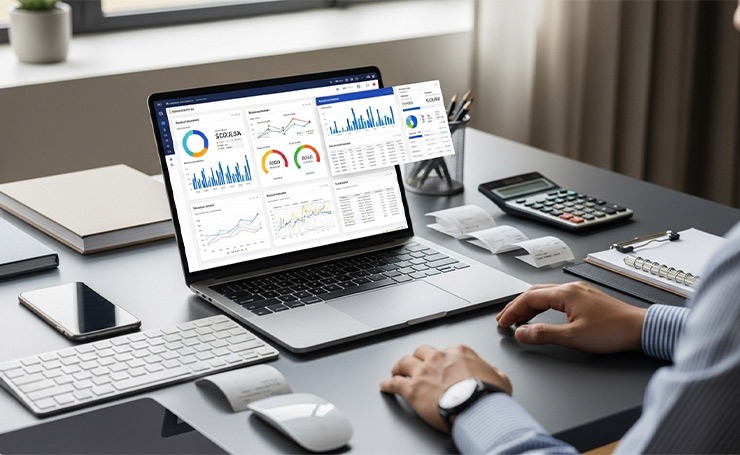
Accounting software automatically
- Crunch numbers
- Do data entry
- Monitor performance metrics
- Generate business reports
Using an accounting application has its pros and cons.
Software Pros
- It automatically enters data, minimizing redundancy.
- You get pre-calculated sales tax.
- Cloud accounting software for small businesses removes the need for setting up costly desktop technology in the office.
- It has a user-friendly interface.
Software Cons
- Security gets riskier within cloud-based services.
- It is often shown as subscription services that charge for annual updates.
- It completely depends on tech support from an outside source.
- Costs can be high, particularly for a desktop-based setup.
Best Accounting Software for Small Business
These programs offer comprehensive accounting services.
- Freshbooks
- GoDaddy
- AccountEdge
- Kashoo
- Sunrise
- Zoho Books
- Quickbooks
- Sage 50cloud
- Xero
- Wave
Small Business Tax Preparation Essentials
For tax preparations, you need year-round planning, not last-minute filing. The best practices include
- Keeping your records organized
- Tracking deductible expenses
- Understanding tax deadlines
- Setting aside tax payments regularly
Poor preparation can lead to penalties, audits, and cash shortages.
Common Small Business Tax Deductions
These are the expenses you are allowed to subtract from your taxable income to lower the amount of tax you owe. Common examples are
- Office rent and utilities
- Equipment and software
- Marketing and advertising
- Professional services
- Home office expenses
Keep all of these documented because deductions without proof can be denied.
Best Practices for Accurate and Stress-Free Accounting
- Separate finances from day one.
- Automate the tasks where possible.
- Review numbers regularly.
- Don’t ignore small discrepancies.
- Seek professional help early.
Small Business Accounting Checklist
These are the things you need to do.
Daily
- Record your income and expenses.
- Save all receipts.
Monthly
- Reconcile bank accounts.
- Review financial statements.
Quarterly
- Review your cash flow.
- Prepare tax estimates.
Year-End
- Finalize all records.
- Prepare tax filings.
- Review financial performance.
Final Thoughts
Small business accounting is a core function. It is important for clarity, confidence, and control. Whether you manage it yourself or outsource, understanding the basics empowers you to make better decisions and build a sustainable business.
For more in-depth information about the world of business, visit Modern Business Guide.
FAQs
How can a Beginner Handle Small Business Accounting?
Beginners should start with basic bookkeeping, use simple accounting programs, separate finances, and maintain consistent records. Outsourcing can also help you during the early stages of the business.
What is the Easiest Way to do Accounting for Small Businesses?
The easiest way is to use cloud-based accounting software combined with regular bookkeeping habits and professional support when needed.
Can I do Small Business Accounting without an Accountant?
Yes, it is possible for simple businesses. However, when the complexity of our business increases, professional accountants help ensure compliance and long-term financial health.
