


20-Second Summary
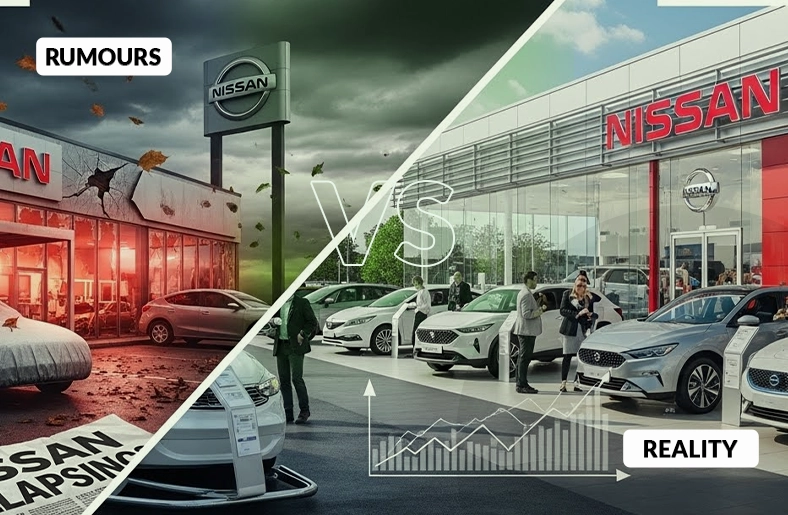
Based on the Nissan bankruptcy rumours, the question, “Is Nissan going out of business?” has become very prevalent in 2025, where consumers, investors, and industry analysts are really concerned about the future of the company.
Despite facing sales declines and a net loss of over $5 billion, this Japanese automaker is still operational and has not yet filed for bankruptcy.
Nissan is now working on an aggressive recovery plan with a new leadership, which is called Re: Nissan, and this plan involves:
- Factory closures
- Job cuts
- Revamping the R&D
- Reimagining of their product strategy
Nissan is doing this to increase their operating profits by the fiscal year 2026.
This blog will help you learn about the serious financial troubles of Nissan and how it is planning to get out of them, which is crucial for consumers and stakeholders.
Is Nissan Going Out of Business or Just Facing Challenges?
The short answer to this question is that Nissan is not going out of business, but they are facing their worst financial crisis, where they need a strategic recovery plan that must succeed, as the next 18 months are really crucial for the company, and the situation will deteriorate further if they do not take care of it in fiscal year 2026.

The company had already been lagging behind its competitors (Honda and Toyota) in not transitioning towards modern automobile trends like electric vehicles.
Let us have a look at the timeline of the company to see its business situation:
| Fiscal Year | Net Income/(Loss) | Operating Profit/Loss | Key Reasons | Status |
| FY2019 (Mar 2019) | $2.88B | $4.98B | Last profitable fiscal year before the crisis | ✅ Healthy |
| FY2020 (Mar 2020) | ($4.00B) | ($0.45B) | COVID-19, chip shortage, Nissan Motor leadership crisis | 🔴 Crisis |
| FY2021 (Mar 2021) | ($1.34B) | ($0.61B) | Pandemic continues, supply chain risks intensify | 🔴 Crisis |
| FY2022 (Mar 2022) | $1.98B | $3.37B | Nissan’s plan to turn around succeeds, and cost reduction gains momentum | ✅ Recovery |
| FY2023 (Mar 2023) | $3.81B | $5.08B | Strong recovery, free cash flow improves | ✅ Strong |
| FY2024 (Mar 2024) | ($5.98B) | ($1.53B) Auto Loss* | Nissan’s fears of going out of business grow – electric vehicle failure, $4.46B impairments, and automotive business operating loss of $1.53B | 🔴 Critical |
| FY2025 (Mar 2026 est.) | ($1.95B est.) | ($1.95B est.) | Re: Nissan recovery plan underway, aggressive cost reduction, job cuts & factory closures | ⚠️ Stabilizing |
*Note
- FY2024 consolidated operating profit was ¥69.8B ($0.62B), but this was only positive due to financial services divisions.
- The core automotive business suffered an operating loss of ¥215.9 billion ($1.53B) with negative free cash flow of ¥242.8 billion ($1.72B), revealing the true severity of operational challenges.
Important Considerations:
- Nissan failed to adapt to the competitive market in the electric vehicle transition with competitors like Tesla, BYD, Honda, and Toyota.
- The company faced an 87.7% Operating Profit Collapse from FY2023 ($5.08B) to FY2024 ($0.62B)
- Nissan now plans to restructure their company framework by including around 20,000 job cuts, closing their 7 plants, and reducing their fixed costs for ¥250B+ savings.
If Nissan does not cover up their crisis by the fiscal year of 2026, then questions on its viability may arise.
Nissan Bankruptcy Rumours Explained
The rumour around the bankruptcy of the company emerged when their financial statements got leaked to the Financial Times, which showed that the company only had 12 to 14 months to survive based on its current financial condition.
This triggered a continuous speculation about the demise of the Japanese automaker.
This leaked statement did not state any imminent bankruptcy filing on behalf of the company. Rather, it emphasized the critical timeframe within which Nissan management must demonstrate tangible progress on its restructuring initiatives.
The company’s free cash flow position remains challenging, but not depleted.
Nissan has taken the following steps to contradict bankruptcy speculations
- The company secured 850 billion yen ($5.8 billion USD) through asset sales and debt issuance.
- Sold a significant stake in Mitsubishi Motors to raise capital.
- Attracted interest from potential strategic partners, including Taiwanese tech giant Foxconn.
- Maintained relationships with major suppliers and alliance partners.
While rumours about the Japanese automaker’s demise exist, Nissan and its stakeholders still consider the company recoverable and are working on stringent strategies to overcome their losses and recover completely.
Nissan Turnaround Plan: Re: Nissan Strategy
In May 2025, Nissan Motor Co. unveiled its comprehensive recovery plan called “Re: Nissan.”

This plan represents their restructuring, which is a detailed and specific turnaround plan comprising the clear metrics by which success can be measured.
Core Objectives of the Re: Nissan Plan
Nissan aims to achieve operating profitability and positive free cash flow in the automotive business by fiscal year 2026.
This plan includes the cost reduction initiatives of approximately $3.25 billion USD as compared to 2024, including:
- Aggressive cost reduction target of ¥250 billion from variable costs.
- ¥250 billion in reduced fixed costs savings.
Variable Cost Reduction Strategy
To achieve the aggressive cost reduction target for variable expenses, Nissan announced the formation of a dedicated transformation office staffed by approximately 300 cost-reduction experts. This team possesses direct authority to make critical decisions without bureaucratic delay.
- Nissan is improving its supply chain by working with fewer suppliers and cutting long-standing inefficiencies.
- The company is also moving 3,000 employees from long-term product development to focus on immediate cost-saving efforts.
- By the first half of fiscal year 2025, the transformation office had generated about 4,000 cost-saving ideas, with about 1,600 ready for implementation.
Nissan Restructuring Actions: What’s Changing
Nissan’s restructuring is not just about cutting costs, but also about bringing change in its supply chain management, changing product strategy, and reimagining all the operations across manufacturing.
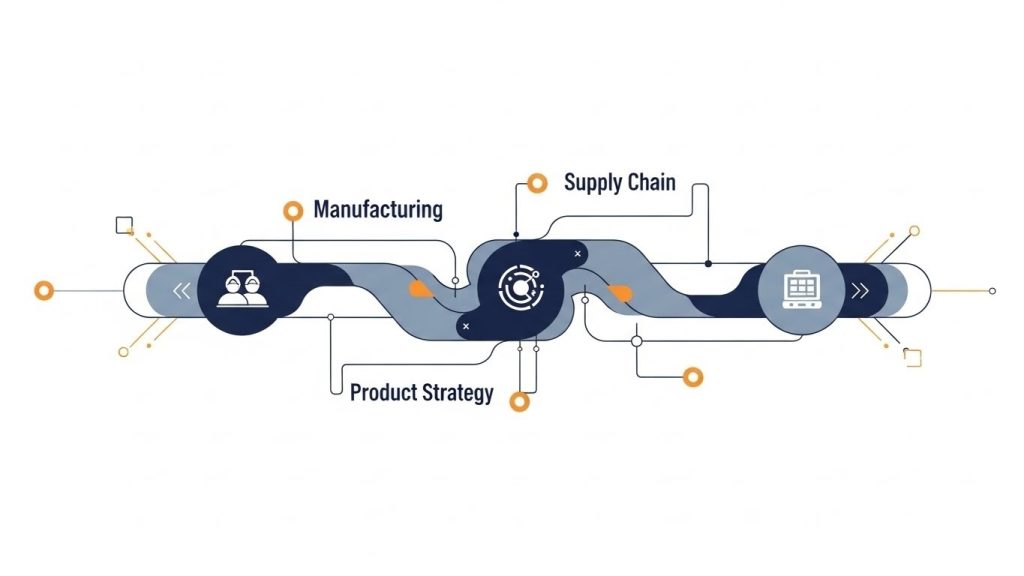
Below are the changes that are expected by Nissan in the upcoming fiscal years.
Manufacturing and Production Changes
- Global production capacity will be consolidated from 17 plants to 10 facilities by fiscal year 2027.
- Seven production sites will close or significantly reduce operations, with decisions already made for five targeted facilities.
- The Oppama plant in Yokohama, Japan, will cease production by March 2028.
- Factory closures in Mexico (Ciudad Industrial del Valle de Cuernavaca) and other regions will reduce global production capacity by 20%.
Product Strategy Transformation
- Vehicle platforms will be reduced from 13 to 7 by fiscal year 2035.
- Parts complexity will be cut by 70%, simplifying manufacturing and maintenance.
- Development timelines for new models will shorten from 50+ months to 37 months, and subsequent variants to 30 months, enabling faster responses to market changes.
Supply Chain Reconfiguration
- Nissan will work with fewer suppliers to simplify operations and improve quality and reliability.
- Fewer suppliers will handle higher volumes. This will create efficiency and encourage innovation with mutual accountability.
Nissan Job Cuts: Scope and Global Impact
Nissan has announced to reduce the company’s workforce by a substantial amount of 10% of the company’s, which is around 20,000 employees across the globe, for the fiscal years 2024-2027.
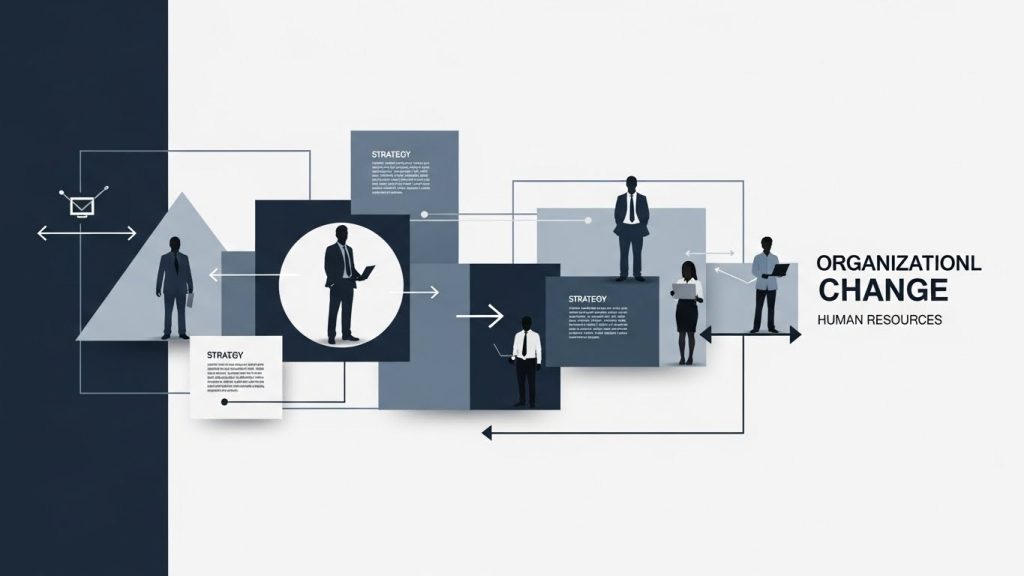
Initially, the company announced the downsizing to be around 9000, which was later on increased to 20,000 reductions in their May 2025 Re: Nisan announcements.
The downsizing from key markets in North America, Japan, Europe, and China, which will be affected by this downsizing strategy, includes the following job roles:
- Direct manufacturing roles on production lines
- Indirect manufacturing and logistics positions
- Sales, General and Administrative (SG&A) functions
- Research and Development (R&D) teams
- Contractual and temporary employees
Although this is a strategic move by the company, it raises the concern of the consumers around the viability of the company, obviously, along with 20 thousand employees whose job stability is at stake.
Nissan Factory Closures and Production Shifts
As mentioned already, Nissan is consolidating its 17 plants into 10 facilities for the following benefits:
- Maximizing their capacity utilization at the remaining facilities.
- Reduce fixed costs through facility elimination and overhead reduction.
- Improve quality through standardized processes across fewer sites.
- Enhance supply chain efficiency with shorter logistics pipelines.
Specific Plant Closures include:
- Oppama Plant’s production is scheduled to end by March 2028. These Operations will shift to Nissan Motor Kyushu.
- Ciudad Industrial del Valle de Cuernavaca (Mexico): Closure announced with production transitioning to other facilities.
- Design Studios: Nissan is closing design centres in San Diego and Brazil to consolidate creative functions.
Nissan Hybrid Strategy: Bridging Now to Tomorrow
While Nissan has already licensed the hybrid technology from their competitor, Toyota, it has not succeeded in making it operational, which is also a reason for its decline.
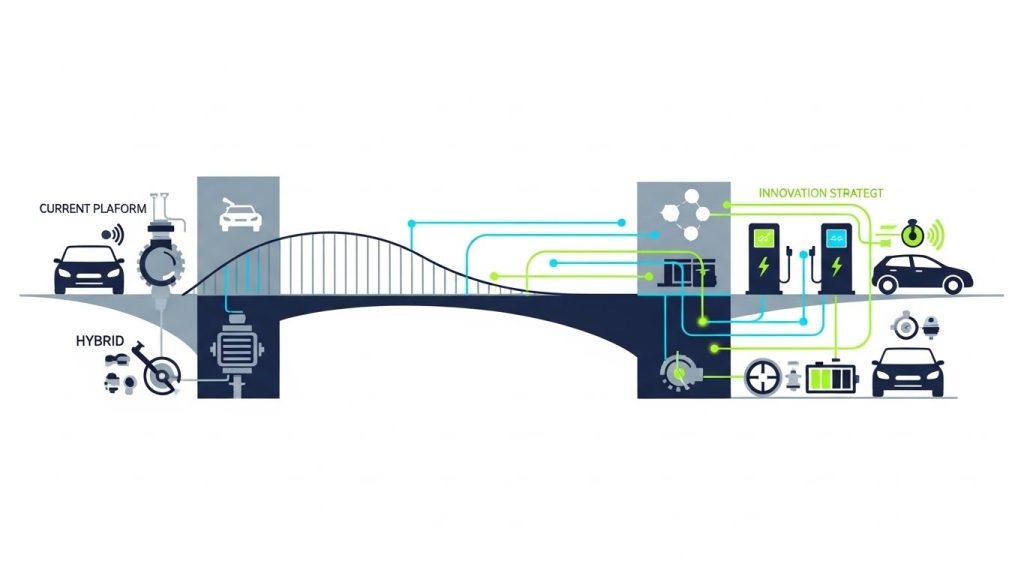
Nissan’s hybrid strategy is now playing catch-up. The company has now scheduled the launch of Rogue Hybrid in 2026, but the competitors already have a lead with their 2 to three years early presence in the market.
- Nissan plans to introduce e-POWER in North America during the first half of 2026, though some sources indicate the company is attempting to accelerate this timeline.
- This hybrid-electric system has gained traction in Japan and is expanding to other markets.
Nissan is taking the following steps to ensure their strategy does not fail in an already competitive environment:
- Nissan Motor Co. is developing all-solid-state batteries for cheaper, longer-range electric vehicles.
- Nissan aims to lower running costs and offer home charging for passenger cars.
- Nissan partners with Honda and uses networks like Tesla Superchargers to grow in key markets.
- Nissan’s plan uses modular platforms and efficient manufacturing to reduce fixed costs.
- Nissan integrates Vehicle-to-Grid tech to support sustainable mobility and energy use.
- Nissan sells intuitive EVs, building on the Leaf experience (Nissan’s first mass-market EV and decade of EV expertise) to strengthen the brand and market share.
Nissan’s Old and Emerging Partnership Opportunities
Nissan’s partnerships are also saying a lot about their market positioning and their viability. Below we have listed down the old partnerships still holding, the ones that were cancelled and the emerging partnerships that the company is expecting by shifting its strategy and revamping its market position.
| Existing Partnerships | Failed / Ended Partnerships | Emerging Partnerships |
| Renault | Honda Merger Talks | Foxconn (Taiwan) |
| Started: 1999 – Ongoing | Started: Early 2025 – Ended: Feb 2025 | Started: 2025 – Underway |
| Type: Equity & alliance | Type: Proposed merger | Type: Tech collaboration |
| Mitsubishi Motors | Planned LFP Battery Plant (Kyushu) | Future EV Platform Collaborations |
| Started: 2016 – Ongoing | Planned: FY2025 – Cancelled | Started: 2025 – Underway |
| Type: Joint venture | Type: Battery production | Type: Modular EV platforms |
| Honda (Tech & Electrification) | North America EV Sedans (Nissan & INFINITI) | – |
| Started: 2020 – Ongoing | Planned: FY2025 – Cancelled | – |
| Type: EV tech & joint projects | Type: Electric vehicles | – |
Nissan Automobile Future: What Experts Are Predicting

Industry experts have very mixed perspectives on Nissan Motor Co.’s future in the automotive industry.
- Those who are optimistic say that new CEO Ivan Espinosa’s leadership will help the company execute the Re: Nissan plan successfully, building momentum for long-term recovery, supporting future growth, and providing a chance to rebuild the Nissan brand.
- Some experts believe that despite achieving operating profitability by fiscal year 2026, Nissan still faces intense competition in key markets, and that previous cost reduction initiatives under a different leader have already failed, raising speculation around the risk to free cash flow and growth.
- Others note that Nissan’s recovery may be too difficult within the planned timeline due to market share erosion, an ageing product portfolio, and organizational inertia.
Final Remarks
As of late 2025, Nissan forecasts a ¥275 billion ($1.8 billion USD) operating loss for the full year fiscal year 2026, based on the following variables:
- Supply chain normalization and cost pressures.
- Successful launch of new models, including Nissan Skyline and electric vehicle offerings.
- Execution of job cuts and plant closures.
- Market share stabilization in key markets.
The company has projected net revenue of around ¥12.5 trillion for fiscal year 2025, though operating profit remains undetermined due to uncertainties in the business environment.
Although the company is working with confidence to rebuild itself based on its strategy, its earlier failure with the same cut-down strategies has people still speculating about their going out of business.
But it is sure that Nissan is still operational, and is working on their stringent recovery strategy, and all we can do is to wait for their results before making any strict assumption around their success or failure. By fiscal year 2026, the market will have clear evidence of whether Nissan’s turnaround is succeeding or merely delaying its demise.
To know more about them, keep visiting Modern Business Guide, as we intend to keep you updated on the matter with future updates.
Frequently Asked Questions
Is Nissan actually going out of business, or are these just rumours?
Nissan is not going out of business immediately, but it faces record financial losses. The recovery plan is credible but depends on successful execution.
What caused Nissan’s financial troubles in 2025?
Nissan’s challenges come from an ageing product lineup, weak electric vehicle offerings, past turnaround plan failures, supply chain inefficiencies, lagging hybrid technology, and management instability after the Carlos Ghosn scandal.
Has Nissan filed for bankruptcy?
No, Nissan has not filed for bankruptcy.
How many jobs is Nissan cutting and why?
Nissan is cutting 20,000 jobs globally between fiscal years 2024-2027. to align the workforce with realistic production volumes and redirect 3,000 employees toward cost reduction initiatives that will improve competitiveness.
What is Nissan’s strategy for electric and hybrid vehicles?
Nissan’s strategy includes developing competitive electric vehicle models, launching the Rogue Hybrid in 2026, expanding e-POWER technology, and potentially accelerating electric vehicle availability in North America by the first half of 2026.
Will Nissan recover and return to profitability soon?
It depends on the success of the Re: Nissan plan’s execution. If they succeed, they will make operating profit and positive free cash flow by fiscal year 2026, but getting back to past profit levels will take several years.
