


Every type of business has its own pros and cons. Not all companies operate in the same way. Once you decide to launch your own business, you need to do proper research in order to understand what type of business you want to start.
Different types of business structures come with different tax implications and legal liabilities. You need to understand the paperwork you need to complete, profit distribution, your responsibilities when the business goes into a loss, and the tax you will pay.
In this blog, you will learn about the various types of business categories with their pros and cons and real-world examples.
30-Second Summary
Are you ready to start your own business, but don’t know about different business structures? It requires a lot of research and understanding of how types of companies differ from each other.
In this blog, learn about various types of business models based on sizes, activities, and how they operate legally. Moreover, with insightful comparisons, choose the business model that retains profit for you.
Why is Understanding Business Entities Important?
Each business structure comes with its own set of responsibilities. All of them have different types of business ownership.
Starting a business without a complete understanding can lead to unexpected complications. Conducting proper research about different types of business entities helps in:
- Protecting personal assets
- Planning for growth and exit
- Determining tax responsibilities
- Staying compliant with the law
Types of Business: Legal Structures
There are many types of business entities to choose from. Below are some of the most common business kinds.
Sole Proprietorship
A sole proprietorship is an unincorporated company. It is owned and run by one individual. It is one of the simplest types of business structures. However, it provides the least financial and legal protection to the owner.
The owner of the business is solely responsible for liabilities and debts, as the owner and the business share the same identity. Therefore, personal assets can be at risk.
Types of Sole Proprietorship
- Self-employed or freelancer
- Independent contractors or subcontractors
- Franchises
- Online businesses and e-commerce
- Service-based sole proprietorship
Real-world Examples
- A freelance graphic designer
- A local grocery store owner
- A home-based bakery
Pros
- It is easy to start as it requires minimal paperwork, making it cost-effective and simple.
- This type of business gives you full control, meaning you make all the decisions and keep the profits.
- The tax filing is simple. The income is personal income, and you will be taxed only once.
Cons
- It comes with unlimited liability. You are personally responsible if the business goes into debt.
- It is hard to raise funds from banks and investors.
- The business may cease to continue if the owner becomes unavailable.
Partnership
Partnership is a type of business which has two or more owners. Partnerships can take advantage of flow-through taxation. It means that the income is treated as the owners’ income and is taxed only once.

The partners in the firm are responsible for its liabilities. However, there are nuances to it that depend on the types of partnerships.
Partnership Types
General Partnership (GP): In this partnership, every member manages the business and shares its liabilities equally.
- For example, two friends who opened a bakery together share equal profits, decisions, and costs.
Limited Partnership (LP): It includes general and limited partners. General partners manage the business and are liable. Limited partners only invest and do not partake in business management.
- For example, in a real estate business, one partner is handling day-to-day tasks. The other one invests without handling management.
Limited Liability Partnership (LLP): In this business structure, all partners have limited liability. That means every partner is protected from the actions of other partners.
- For example, in an accounting firm, each partner is protected from liability for the mistakes of others.
Real-world Examples
- Real estate investment groups (LPs)
- Small consultancy (GP)
- Law firms (LLPs)
Pros
- All partners share the responsibilities and resources.
- Partnerships have a better chance at funding than sole proprietors.
- This structure allows flexibility in how to run the business.
Cons
- Businesses can suffer due to disagreements between the partners.
- It is complicated to dissolve the partnership.
- In general partnerships, every partner is liable.
Limited Liability Company (LLC)
An LLC is one of the most flexible types of business. This form of business combines aspects of partnerships and corporations. It has the limited liability of corporations and the tax benefits of sole proprietors.
Moreover, LLC can choose various tax treatments. It can maintain its flow-through taxation if it chooses not to become a C corporation.
Real-world Examples
- Online retail business
- Local event planning service
- Boutique marketing agency
Pros
- It offers limited liability. The liability for the debts does not fall on the owner.
- Owners can decide whether they want to be taxed as sole proprietors, corporations, or partnerships.
- Ownership and management are flexible.
Cons
- LLCs cost more to establish than partnerships or sole proprietors.
- LLCs must meet paperwork requirements and ongoing compliance.
Corporation
A corporation is a more complex business setup. As a separate legal structure from its owners, it can own property, be taxed, and be sued. Although it provides the strongest protection against liability, this setup is time-consuming and costly.
Corporation Types
C Corporation: This corporation pays double tax: on its income, and shareholders also have to pay taxes on dividends.
S Corporation: It avoids double taxation, as the income at the shareholder level is taxed.
B Corporation: It focuses on making a profit as well as a positive impact on society and the environment.
Real-world Examples
- Small family-owned firms (S Corporation)
- Tech startups (C Corporation)
- Socially conscious companies (B Corporation)
Pros
- Corporations have strong credibility and attract investors.
- This business setup offers limited liability to its shareholders.
- Even if the ownership changes, corporations keep existing.
Cons
- Establishing a corporation requires more paperwork and is costly.
- C Corporations have to pay double taxation.
- Corporations go through strict regulations and reporting rules.
Cooperative (Co-op)
This business is owned and maintained by a group of individuals for their mutual benefit. Members have a say in the business’s decisions and profits.
- For example, a grocery co-op where farmers and consumers manage resources and share the profit.
Pros
- Cooperatives owned by members prioritize shared goals over profit. It results in democratic decision-making.
- It is a financially fair business model as the profits are shared between members, not outside shareholders.
- Co-ops often have strong ties and collaboration among members.
Cons
- Decision-making can be slow, as it involves the consensus of the majority.
- This model relies mainly on members’ contributions and has limited outside funding. It makes raising capital difficult.
- Lack of professional management can affect the efficiency and competitiveness of operations.
| Model | Liability | Taxation | Setup Cost | Best For |
| Sole Proprietorship | Unlimited | Personal | Low | Freelancers and small retail |
| Partnership | Shared or Varies | Personal | Low to Medium | Professional services |
| LLC | Limited | Personal or corporate | Medium | SMEs and startups |
| Corporation | Limited | Corporate | High | Large companies and investors |
| Cooperative | Limited | Varies | Medium | Community-oriented businesses |
Other Types of Business Models
Below are some other types of business structures.
Franchise
A franchise allows people to buy the rights to operate a branch of an already successful business. This is a great way to operate a business with a proven model.
- For example, a person who operates a branch of KFC will benefit from the brand’s customer base and operating procedures.
Joint Venture
When two parties come together to work on a single project, it is a joint venture. It is a temporary partnership for a shared business activity.
- For example, two tech companies work on developing a new software product. Both companies will share their costs and profits.
Non-Profit
A non-profit is a type of business that is exempted from tax by the Internal Revenue Service (IRS). The reason for this exemption is that this business is working for a social cause and benefits the public.
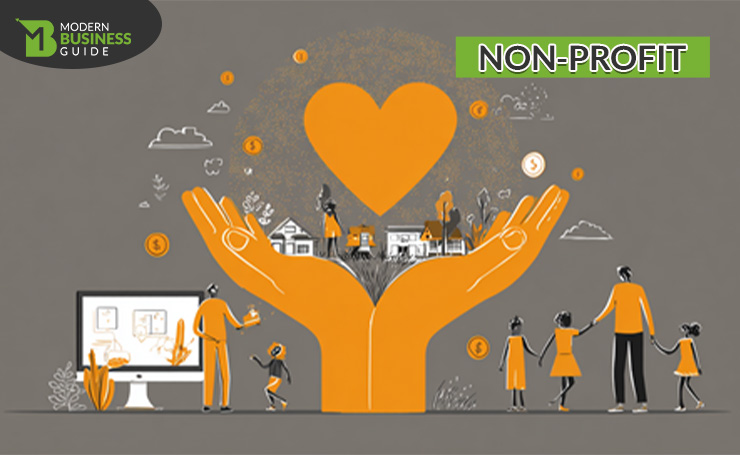
- For example, a group of individuals creates a non-profit organization to provide free education to underprivileged children. All the profit gets reinvested into the business.
Holding Company
A holding company has enough shares in another company to control it, but does not produce any goods or provide any services itself. It manages multiple businesses under one umbrella.
- For example, Alphabet Inc. is the parent company of Google. It manages various subsidiaries.
Trust
This business model is a legal arrangement where one party holds the property for the benefit of the other party. This business is used in estate planning and asset protection.
- For example, a family trust that holds properties and manages them to ensure that they are passed down to future generations.
Social Enterprise
This business has a dual mission of making a profit and making a positive impact on society or the environment. The surplus of profit is also reinvested in the business.
- For example, for every pair of shoes TOMS sells, it donates one pair to a person in need. The company earns profit, but it also works for social good.
LLC vs Corporation: A Comparison
LLCs and Corporations are two types of business structures, each with its own operations.
| LLC | Corporation |
| It has fewer formalities.It offers flexible management.The profit passes through all members.Choose an LLC if you are looking for simplicity and tax flexibility. | It attracts investors due to its market position.It has a more rigid structure.The profits of C Corporations are taxed twice.Choose a Corporation if you are looking for investment and planning to scale. |
Types of Business Entities Based on Size
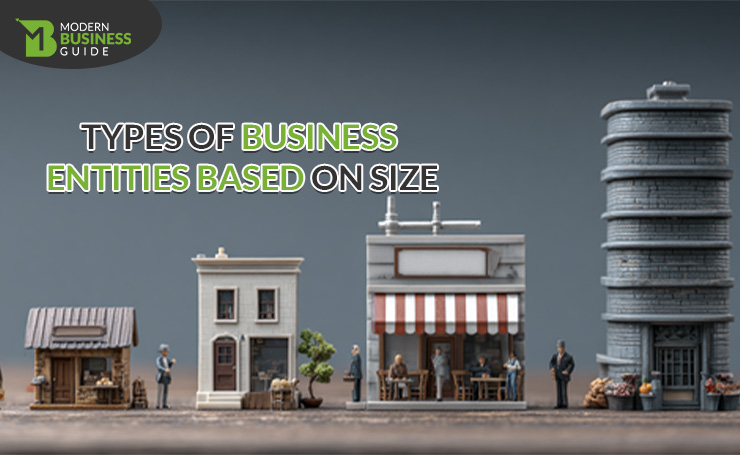
It is necessary to understand the size of a business to know its growth potential and financial needs. There are 3 types of businesses when it comes to size.
Small Businesses
Small businesses are owned and operated independently. Such businesses have fewer employees and lower sales. These types of businesses offer services to local markets or in specific niches.
Small business types include sole proprietorship, Limited Liability Corporation, and Partnerships.
- Small businesses can quickly change to meet any client’s needs without many complications.
- Small businesses often have strong and loyal customer bases.
- Some examples include small law firms and local shops.
Medium-sized Businesses
Mid-sized businesses are larger than small businesses in terms of revenue. These businesses operate in various locations and have a formal management system.
Such companies have an employee count between 100 and 499. Due to a large number of employees, these businesses face a higher turnover rate. However, these businesses also have a large number of job opportunities.
- Medium-sized businesses are more focused on growth. They try to increase their sales by increasing their market reach.
- As these companies grow, they create a defined management system and departments, such as marketing and finance.
- Some examples of medium-sized businesses include mid-sized manufacturing firms, growing tech companies, and regional restaurant chains.
Large Businesses
Large businesses have higher sales volumes, strong market positions, and a large number of employees. These businesses have an international reach and operate nationally as well. The resources and infrastructure of large businesses are extensive.
These companies hire management professionals who can handle their respective departments. Common departments include Human Resources, accounting, marketing, sales, and customer support.
- The management is layered and complex. There are many formal structures to handle operations across multiple locations.
- They can manufacture products and provide services at a lower cost. It often leads to competitive pricing.
- The examples include global companies such as Apple, Walmart, and Toyota.
Types of Business Structures Based on Activities
The major types of business models based on the product offered are below.
Service Business
A service business provides intangible products. These businesses focus on offering skills, expertise, labor, and similar services. They also charge service fees.
The examples of service businesses are:
- Professional services, including legal work, computer programming, advertising, accounting, and engineering etc.
- Personal services, including beauty salon, laundry, photography, and pet sitting etc.
- Automotive services, including repairs, car wash, and car rental etc.
- Hospitals, clinics, schools, and banks
- Gyms, golf courses, theaters, and amusement parks.
Merchandising Business
The merchandising business buys products at wholesale prices but sells them at retail prices. These types of business entities are also known as “buy and sell” or “reseller” businesses.
They sell the product without changing it and at a higher price to gain profit.
Some examples of merchandising businesses include:
- Department stores
- Home furniture
- Appliance stores
- Consumer electronics
- Drug stores
- Hardware
- Clothes and accessory shops
Manufacturing Business
A manufacturing business purchases products to use as raw materials to create new products. This business model transforms the product it purchases.
In its production process, a manufacturing business combines various factors, including raw materials, labor, and overhead costs. The new goods are then sold to the consumers.
Examples of manufacturing businesses include:
- Food processing includes dairy products, frozen goods, canned meat, and bottled drinks.
- Textile production from wool, polyester, cotton, etc.
- Use of wood and metal in cabinets, tables, and other furniture.
- Plastic and rubber production, oil refineries, and chemical laboratories
- Car makers, ship builders, and aircraft manufacturers
Wrapping It Up
There are multiple types of business organizations, each with its own operations and goals. Understanding how different types of business models work is crucial if you are planning to launch your own.
This blog explored every business form in detail. It offers important insights into businesses based on size, product offered, and legal structures. Use this guide to make a wise decision to establish a business that fits your vision.
For more business-related updates, explore the Modern Business Guide.
FAQs
What are the common types of business structures?
The main types of businesses based on structure are sole proprietorship, partnership, Limited Liability Company (LLC), and corporation.
Which Business Structure is best for a small business?
For a small business, opt for an LLC or sole proprietorship. They offer ease of setup and have lower setup costs.
How do I choose the right business entity?
The right type of business entity is the one that aligns with your goals. You need to consider different factors, such as tax preferences, liability protection, scalability, and funding. These factors will help you choose the one that brings you the most profit.
What is the benefit of choosing a Cooperative business model?
Co-ops focus on building community ties with members, emphasizing democratic ownership, and sharing funds fairly among all members.
What are the major types of business models based on activities?
There are three types of business structures when it comes to activities: service business, merchandising business, and manufacturing business.
