


20-Second Summary
When asked, “What is a business? There are many key terms that need to be addressed clearly. This comprehensive guide blog will help you understand the definition of a business with an easy-to-understand explanation of:
- Non-profit and For-Profit businesses
- Business types based on their size
- Business types based on their activities or operations
- Business Structure based on legal frameworks
- The difference between a business and a company
- How does a business help the economy?
- And how does a business become successful?
Let’s begin!
What is a Business?
A business is an organization run by one or more people to sell manufactured products or services in order to make a profit.

- A business can be run with a physical presence or solely online, too.
- Some businesses that run as non-profits use their profits for charitable causes and donate the money.
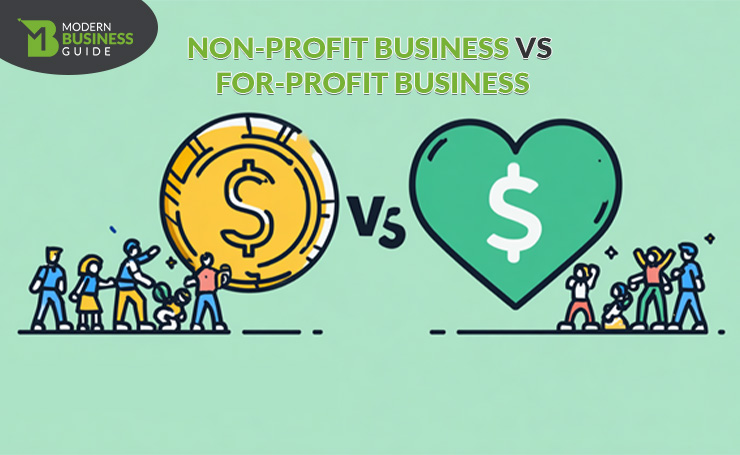
Non-Profit Business vs For-Profit Business
- People running businesses as non-profits use all of their profits to help the needy, offering all of their earnings to different charities. They reinvest their profits to further their cause.
- In contrast, the for-profit businesses sell their services or products in order to generate and share the profits among their owners and shareholders. They distribute the profits among the business partners.
Why are businesses important for the economy?
Businesses play an important role in the economic growth of their respective countries with a global impact as well. Let us look at the purpose of a business for its country, community, and the world.

- By selling goods and services, businesses create wealth while fulfilling the needs of people.
- This wealth helps to increase the Gross Domestic Product rate of countries, increasing their economic growth, which keeps expanding as businesses keep reinvesting to generate more products, services, and profits.
- Businesses also create job opportunities, reducing the unemployment rates and creating an economic cycle as people spend their incomes on their needs. Small businesses play a key role in job generation.
- Businesses with new ideas bring innovation, which refines quality of products and services pushing the competitors to bring more improvements, which leads to continuous business innovation.
- Revenues of businesses also end up paying taxes to the governments, that is invested to build the infrastructure of countries, supporting national development.
- Businesses operating at a large scale globally also attract more foreign investments, adding to economic growth.
- Businesses, especially small businesses, help with community development by helping other small businesses to grow or sponsoring charities.
What is a Business Model?
A business model is a blueprint of how a business will provide value to its customers. It covers the following questions:
- What products or services will be sold?
- What costs will be incurred to produce and sell them?
- Who is the target audience?
- How and where will the products and services be sold?
With the help of a business model, a business can basically have a setup plan for its operations and how these will make it profitable.
A well-established business model helps businesses:
- To be clear about their goals
- To attract investors based on their business model and its potential.
A business model defines the goals, based on which a business plan can be developed after doing market analysis.
The business plan encompasses financial projections and the formulation of detailed strategies to help execute the goals based on the business model and achieve the required profits.
Different Types of Businesses (Based on Activities)
The types of business can be classified into two categories based on their size and the activities. Let us have a look at how businesses can be of different types based on their activities or operations.

- Manufacturing Businesses
- These are the businesses that create and sell products. Their products go through a proper supply chain process from being manufactured from raw materials, to being packaged and sold to the customers.
- Businesses like Nike, Good American, and Fenty Beauty fall into this category.
- Service-based Businesses
- These businesses offer intangible experiences to others without selling any physical products.
- Businesses like hospitals, restaurants, and salons fall into this category.
- Retail Business
- These are the direct sellers who sell the products of the big businesses through their shops.
- Sephora outlets selling different brands of makeup are an example of a retail business.
- Wholesale Business
Wholesale businesses basically bulk buy products from the manufacturing businesses and sell them to the retailer businesses or directly to the consumers at a slightly lower cost than the market price.
- E-Commerce Business
These are the businesses that are running solely online, and they sell their services or products, targeting and reaching out to the audiences using the internet as a medium.
Different Types of Businesses (Based on Size)
Based on their size, i.e., basically their number of employees and annual revenues, businesses can be categorized into small, medium, or large-sized businesses.

- Small Business
- A small business usually has fewer than 100 employees.
- This is a globally accepted value, but some countries may have differences. As per the SBA in the US, a small business has fewer than 500 employees.
- Their annual revenues are usually up to $50 million.
- Medium Business
- Medium-sized businesses have between 100 and 999 employees.
- Their annual revenues are between $10 million and $1 billion.
- Some countries or regions like the EU may have differences in the revenue for medium-sized businesses, like the value can be up to $50 million USD only.
- Large Business
- Large businesses usually have 1000-plus employees.
- Their annual revenues are usually between $100M and $1B+.
Legal Structures of Businesses
When we structure a business based on the legal frameworks around the partnerships, profits, and losses sharing, along with the tax payment requirements, a business can be categorized into four types.
- Sole Proprietorship
- In a sole proprietorship, a single person is the legal owner of the business and has individual, unlimited liability for the business debts and obligations.
- The individual pays the tax as per their income tax rate and requires very little paperwork, being the sole owner.
- Partnership
- In a partnership structure of a business, two or more people become partners for a business startup, agreeing to share the profits and losses of the company.
- These partnerships can be of two types:
- General liability where all the partners are equally liable for profits and losses.
- Limited liability, where some partners have limited liability compared to others.
- The profits are passed through the partners, where each partner pays tax on their share of profit.
- Limited Liability Company (LLC)
- The owners of an LLC are not legally liable for business debts, hence have limited liability and can protect their assets.
- LLCs have mixed features of a corporation and a partnership business structure.
- The management system is flexible, as all the members can manage the business, or just managers can be asked to manage the business operations.
- The tax passes through the owners, when each owner pays the tax on their profit income, making it a single-time tax payment rather than paying twice, as in large companies.
- With an LLC, the business acts as an entity, which can own properties, can sue or be sued in the courts as an entity without having its owners be taken into court.
- An LLC can have a limited lifespan, which means it may be given a specific time to exist by the legal frameworks in case any of the partners leaves or dies.
- This business structure may need to be dissolved or recreated if a member leaves the contract for any reason.
- In the U.S., LLCs are flexible and can choose how to be taxed. Structures vary internationally.
- Corporation
- A corporation under law is treated as an entity that can own assets, be sued, or form contracts.
- Its owners have limited liability, which protects their personal assets from being dissolved in case of any losses. Only the assets owned by the business as an entity will be dissolved if needed.
- The corporations can be of two types (S-Corps and C-Corps), and for both, the taxation legalities differ.
- The C-Corp requires double taxation, where the corporation pays the taxes as an entity, and then all the individual owners pay taxes on their profits income as well.
- In an S-Corp structure, double taxation is avoided. These pass profits and losses through to the owners’ individual income.
- S-Corps are only available to U.S.-based businesses meeting IRS criteria.
- Both C-Corps and S-Corps are not affected if any of the members or owner leaves the company. The corporations keep operating after that, too.
- The corporate structure of a business is usually complex to manage and create.
- Cooperative
- A cooperative business structure is owned by the people who are using its products and services for their benefit.
- This business structure has a board of directors chosen by the members, and then each member holds ownership by buying some shares in the business.
- The members who own the cooperative business can cast votes and impact the decision-making, and this is not impacted by their share size. All members’ votes will be considered equally.
- The tax is paid once only, and is passed through the owners and paid as per their share of profits.
- Tax treatment and governance of cooperatives vary by country.
Business vs Company
All companies can be businesses, but not all businesses are companies. The difference between the two can be seen through five major points:
- Their legal status
- Type of ownership
- Taxation
- Legal Structure
- Lifespan
Below is a tabular representation of the differences between a company and a business for an easy understanding perspective.
| Point of Difference | Business | Company |
| 1. Legal Status | May or may not be legally registered | Legally registered entity |
| 2. Ownership | Owned by individuals or informal groups | Owned by shareholders or members |
| 3. Taxation | Income taxed as personal income | Taxed separately under corporate tax laws |
| 4. Structure | Informal and flexible (Such as freelancing or online business) | Formal legal structure (e.g., LLC, S-Corp) |
| 5. Lifespan | May end with the owner | Continues to exist beyond ownership changes, as in S-Corps and C-Corps |
What Makes A Business Successful?
For a business to become successful, it must have the following:

- A mission statement that explains its current position and reason for existence, along with its vision statement. The vision statement focuses on where the organization wants to be in the future.
- The organization must have a strong business plan, based on its business model, along with market research, financial projections, and strategies and objectives that will help it to meet its goals.
- A business must consider the needs of its customers and create and provide quality products and services, in order to create loyal customers and a good word of mouth that supports the business in the long term.
- Businesses also need to hire qualified employees, and most importantly, a business must learn how to retain its employees, as retaining high performing employees is more profitable for a business than having to fire and hire new staff frequently, spending time and money on training for each new hire.
- Businesses also need to become adaptable to the changing dynamics of markets and customer expectations, such as a sustainability approach in manufacturing and using green supply chain management processes.
Final Remarks
Businesses, especially small-scale businesses, are the backbone of an economy. They create job opportunities, add to the GDP of the countries, provide people with the products and services they need, and also bring innovation.
Although the businesses are mostly built with an aim of earning profits, the businesses nowadays need to comply with the environmentally friendly approaches in their manufacturing and delivery procedures.
This blog has provided a comprehensive guide about different types of businesses, their legal structures, along with the requirements for them to become successful.
For more business-related information, keep coming back to Modern Business Guide, as we keep updating fresh business insights on a regular basis.
Frequently Asked Questions
- What is the simple definition of a business?
In simple words, a business is an entity owned by one or more individuals that provides products or services to its customers.
- What are the 5 main types of businesses based on their activities?
Based on their activities, businesses can be categorized into these five types: Manufacturing Businesses, Service-based Businesses, Retail Businesses, Wholesale Businesses, and E-Commerce Businesses.
- What is the difference between a business and a company?
A company is a legally registered business entity that offers limited liability and has a separate legal status, whereas a business can be any individual profit making activity without limited liability.
- What is the purpose of a business?
The main purpose of a business is to provide customers with their desired products and services, to create a profit, create jobs, and add to the economic growth of their country.
- What are the legal types of business structures?
The legal structure types of a business include: Sole proprietorship, partnership, cooperatives, corporation, and Limited Liability Company.
- What makes a business successful?
A business becomes successful based on a strong foundation of business model, business plan, financial projections, great talent acquisition and retention, along with its flexibility to adapt to environmental and market changes.
